More than 60 million Americans experience heartburn at least once a month. Some studies suggest that more than 15 million Americans experience heartburn symptoms each day.
Heartburn is a burning feeling behind your breastbone, in your neck, or in your throat. This feeling is often worse after eating, in the evening, or when lying down or bending over. Being pregnant or overweight can make heartburn more likely.
There’s a difference between what makes you more likely to experience heartburn and what triggers heartburn. Fatty foods, for example, lower your anti-reflux barrier, which can increase your chances of heartburn. Acidic foods may trigger heartburn the moment they hit your esophagus. Avoiding heartburn triggers will help stop heartburn.
What makes heartburn worse?
Spicy foods
Acidic foods, like those with tomatoes (pasta sauce or salsa) or those with citrus (oranges or lemons)
Alcohol
Caffeinated beverages, like coffee and tea
Acid Reflux
Acid reflux is when the contents of your stomach—like food or acids—go in the wrong direction. They travel from your stomach back to your throat through the tube connecting them, your esophagus. When you have acid reflux, you may taste food or stomach acid in the back of your mouth. This can be uncomfortable and make you feel sick. Acid reflux is also referred to as GER (gastroesophageal reflux).
GERD
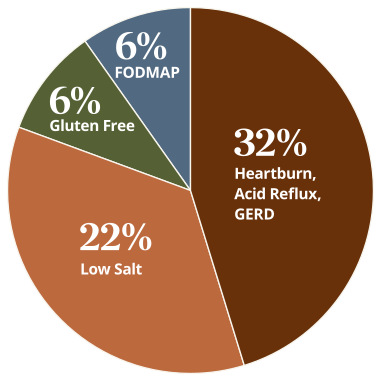
GERD (Gastroesophageal reflux disease) is a persistent gastrointestinal illness in which gastric contents reflux into the esophagus. With a prevalence of up to 32%, it ranks among the most frequently reported digestive diseases in the United State. In 2021 the Esophageal Cancer Research Foundation published that Esophageal Cancer has increased during the last 40 years by more than 733%. The rise is attributed to factors like dietary habits and lifestyle changes.
Dietary Restrictions Comparison
Heartburn, Acid Reflux, & GERD
Heartburn, acid reflux and GERD are persistent gastrointestinal illnesses. With a prevalence of up to 32%, it ranks among the most frequently reported digestive diseases in the United States.
Gluten Free
How common is gluten intolerance?
Research suggests that about 6% of the U.S. population is gluten intolerant. It’s more common than celiac disease, which affects about 1% of the population.
Low Salt Diet
Case studies show that 22% reported receiving advice from a health professional to reduce sodium intake.
FODMAP Diet
The low FODMAP diet is the most recommended dietary intervention for the clinical management of IBS symptoms. IBS is one of the most common and stubborn conditions gastroenterologists treat affecting roughly 6% of Americans.